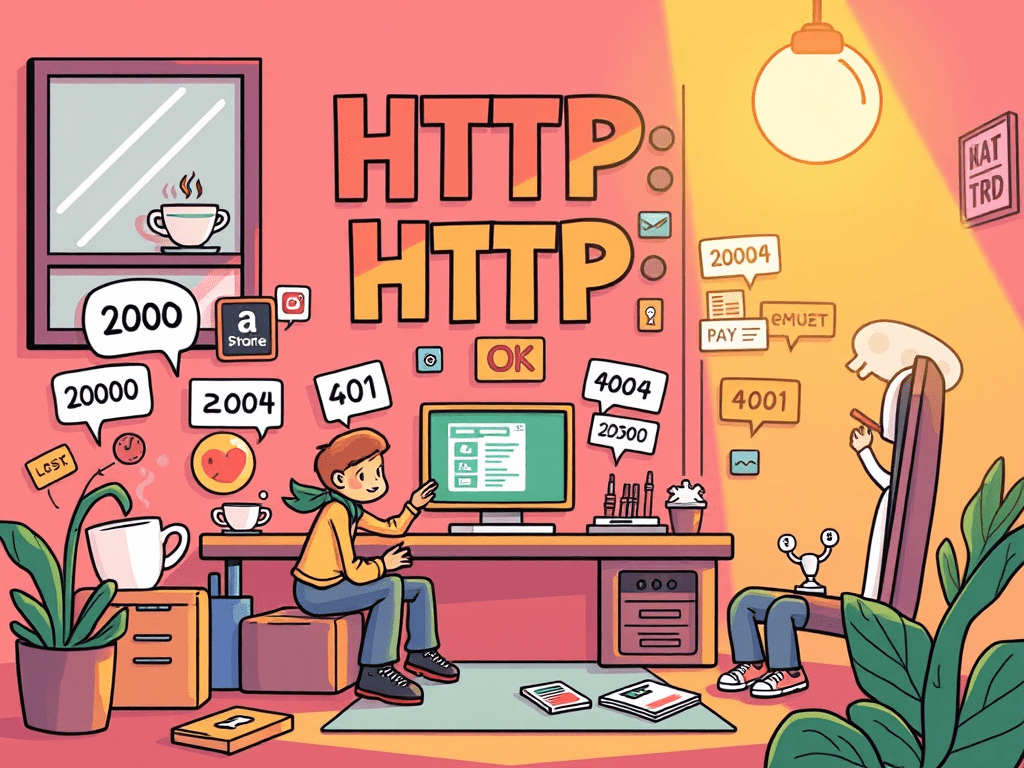
Ever clicked on a link and been hit with a weird number like 404 or 500? These, my friend, aren’t random numbers—they’re HTTP status codes, the internet’s way of whispering, “Hey, here’s what’s REALLY going on.”. Think of them as little notes that web servers send back whenever you request a webpage. Sometimes they mean everything is fine, other times they mean something has gone horribly wrong.
As a developer, I see these daily, and honestly? They’re just like real-life awkward moments. So instead of a dry technical breakdown, let’s make this fun—because debugging websites is already painful enough.

1. 200 – OK – Everything’s Fine, Keep Scrolling
“All good! Here’s what you asked for.”
This is the best-case scenario. Your request went through, and the website is serving up exactly what you wanted. It’s like walking into your favorite coffee shop, ordering your usual, and getting it exactly how you like—no confusion, no mistakes, just perfection.
2. 201 Created – New Thing Alert!
“Success! Something new has been created.”
This happens when you successfully upload a file, submit a form, or create an account. It’s like sending an online order and immediately getting a confirmation email—yes, your overpriced gadget is officially on its way.
3. 301 Moved Permanently – We Don’t Live Here Anymore
“This page has moved. Forever. Redirecting…”
Ever tried visiting an old website and it suddenly takes you somewhere else? That’s a 301 redirect in action. Imagine moving to a new apartment and setting up mail forwarding—except instead of letters, it’s the entire internet being rerouted.
4. 302 Found – Temporary Detour
“This isn’t the final page, but check this out instead.”
Unlike 301, a 302 means the move isn’t permanent. It’s like when your favorite restaurant is under renovation, but they tell you to go to their temporary pop-up across the street.
5. 304 Not Modified – Just Use What You Already Have
“No changes here. Use the cached version.”
This is the internet’s way of saying, “Hey, nothing’s changed since your last visit, so just use the version you already downloaded.” Think of it like rewatching your favorite Netflix show—you don’t need to redownload the episodes; they’re already on your device.
6. 400 Bad Request – What Are You Even Asking For?
“Your request makes no sense. Try again.”
Ever texted someone while half-asleep and sent gibberish? That’s basically what a 400 error is. The server is saying, “I have no idea what you just asked me to do.”
7. 401 Unauthorized – Who Even Are You?
“You need to log in first.”
Trying to sneak into an exclusive club without an invite? Nope, not happening. A 401 means you need the right credentials before you can proceed. VIPs only.
8. 403 Forbidden – You’re Not Allowed Here
“You don’t have permission to access this.”
This is like showing up at an event with no ticket and getting turned away at the door. Even if you know the party is inside, security isn’t letting you through.
9. 404 Not Found – That Thing You Want? It’s Gone.
“This page doesn’t exist. Sorry!”
The most famous of all errors. It’s like looking for a store that shut down last year—Google Maps may say it’s there, but all you find is an empty lot.
10. 405 Method Not Allowed – That’s Not How We Do Things Here
“You’re using the wrong method.”
Imagine pulling up to a drive-thru on a bicycle. Sure, you technically arrived, but the system wasn’t designed for this.
11. 408 Request Timeout – You Took Too Long
“You were too slow. Try again.”
Ever had a cashier cancel your order because you took too long to find your wallet? That’s a 408 in action. Servers don’t like to wait forever.
12. 429 Too Many Requests – Calm Down, Please
“You’re sending too many requests. Chill.”
This happens when you refresh a page a million times, hoping it loads faster. The server is basically saying, “Hey, take a deep breath and stop spamming me.”
13. 500 Internal Server Error – Something Broke and It’s Not Your Fault
“Uh… something’s wrong, and we don’t know what.”
This is the digital equivalent of a restaurant’s kitchen catching fire. You ordered food, but now the whole place is in chaos.
14. 502 Bad Gateway – The Middleman Messed Up
“The server I talked to is broken. Not my fault.”
You call a friend to ask for another friend’s number, but they give you the wrong one. That’s a 502. The first server tried to fetch data from another, but something went wrong in between.
15. 503 Service Unavailable – We’re Overwhelmed, Try Later
“We’re too busy right now. Come back later.”
Imagine Black Friday shopping, but the website crashes because everyone is trying to check out at once. That’s a 503—too many people, not enough resources.
HTTP codes are the internet’s mood ring. Learn them, laugh at them, and never let a 500 ruin your day.
Want to Dive Deeper?
- MDN Web Docs on HTTP Codes
- HTTP Status Dogs (Yes, it’s a thing)
- Test codes with tools like httpstatus.io
If you enjoyed this post and want more fun, developer-friendly breakdowns of tech concepts, subscribe to my blog! I share insights, tips, and relatable tech moments. Let’s navigate the web together—join the journey today!



 Days in the Life of Mo
Leave a Reply