
You’re sipping your coffee, trying to reset your password for the fifth time because your brain said “remember me” but your browser did not. Then bam; you’re hit with a CAPTCHA.
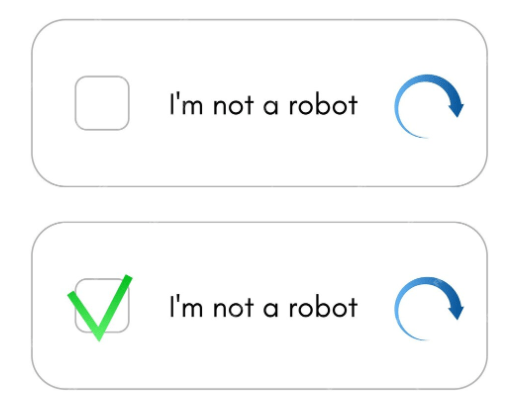
“Select all images with traffic lights.”
“No, not that one. That’s a pole. Do you even drive?”
“Try again.”
Suddenly, you’re spiraling. Is this how it ends? Not in fire, nor ice; but in pixelated traffic lights and shattered confidence?
But First, What Even Is a CAPTCHA?
CAPTCHA stands for Completely Automated Public Turing test to tell Computers and Humans Apart. In short: it’s a digital doorman making sure you’re human and not a robot trying to flood a site with spam, fake accounts, or malicious activity.
It was invented in the early 2000s by a group of researchers at Carnegie Mellon University, and it’s evolved ever since; from blurry word puzzles to traffic light identification marathons.
So yes, CAPTCHAs have been that annoying for over 20 years. And they’re still here. In 2025.
Why Are They Still a Thing?
Let’s break it down:
1. Bots Have Gotten Very Smart
Back in the day, bots were cute and clunky. These days? They’re practically Olympic gymnasts, jumping through login loops and security gaps like Simone Biles. Generative AI tools can now solve basic CAPTCHAs faster than you can say, “I am not a robot.”
According to a study by the University of Maryland, bots are now solving many common CAPTCHAs with 85–95% accuracy.
2. CAPTCHAs Help Train AI (Yes, Really)
Every time you pick out a crosswalk or a bus in an image, you’re helping feed data to machine learning systems. Google’s reCAPTCHA has been training its self-driving AI to better identify objects in the real world, using your unpaid labor. Love that for them. Capitalism wins again.
3. The Internet Is a Hot Mess
With bots pushing spam, cracking passwords, scalping Taylor Swift tickets, and pretending to be you in DMs; CAPTCHAs are the low-budget bouncers holding the front line. Imperfect, yes. Necessary? Also yes.
So… What’s New in 2025?
The CAPTCHAs of today are shifting. Some of the newer approaches include:
– Invisible CAPTCHAs
These lurk silently in the background, analyzing user behavior, mouse movements, typing speed, and click patterns. This is done to assess if you’re human. If you move like a human (erratic and emotionally unstable?), you pass.
– Biometric Hints
Some sites now use device fingerprinting and behavioral biometrics. Translation: how you swipe, how long you hover, even how you scroll. It’s giving “Black Mirror,” and yet we allow it.
– Turnstile by Cloudflare
In a plot twist, Cloudflare released Turnstile, a CAPTCHA alternative that requires no user interaction at all. It uses machine learning to verify users without annoying them.
They really said: “What if we verified you’re human… and let you keep your dignity too?”
Okay, But Why Do I Still Have to Do It?
Because despite all the advances, sites don’t want to risk a false negative and let an actual bot through. You still have to jump through hoops because bots got smarter, and ironically, you might act robotic sometimes.
(Trying to log in at 2AM from your friend’s Wi-Fi in another country? Suspicious. Clicked 10 links in 2 seconds? Suspicious. Used Internet Explorer in 2025? Definitely suspicious.)
We may roll our eyes and mumble “not this again” every time a CAPTCHA pops up, but it’s worth remembering: they’re here because the internet is wild, bots are clever, and somewhere out there is a teenager writing a script to crash your favorite website just for fun.
So next time you’re identifying all the bicycles in grainy 240p images, take comfort in this: at least you know what a bicycle is.
The robot doesn’t.
Yet.
Subscribe for more musings
Enjoyed this chaotic blend of tech, sarcasm, and low-key existential crisis? Subscribe to the blog for more code-side commentary, keyboard therapy, and all the weird stuff I Google so you don’t have to.

 Days in the Life of Mo
Leave a Reply