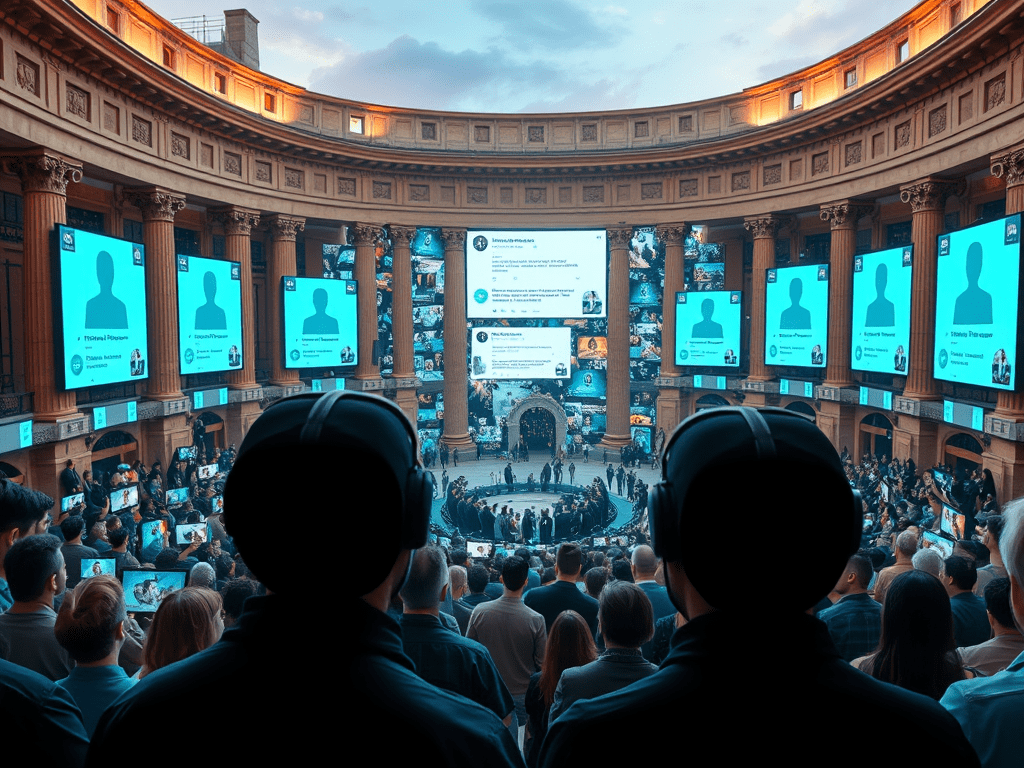
Every time I scroll through my feed, I can’t help but think:
This isn’t new.
We’ve just traded the amphitheater for an algorithm.
Because long before hashtags, filters, and followers, there were masks, choruses, and crowds shouting “Opa!” as someone’s reputation went up in flames.
Welcome to social media, also known as modern-day Greek theater… where everyone’s both performer and audience, and tragedy sells better than truth.
The Stage: Once marble, now digital
In ancient Greece, theater wasn’t just entertainment, it was public life.
People gathered in open-air amphitheaters to watch stories about gods, betrayal, justice, love, and hubris.
The plays weren’t just drama; they were moral classrooms, reflections of who people were and what society valued (Aristotle called this mimesis – imitation of life).
Fast forward 2,000 years, and we’re still imitating life. Only now, we call it content.
Our theaters are timelines.
Our masks? Carefully curated profiles.
And our audiences? The same old judgmental crowd, just louder and online.
The Masks: Persona over person
Actors in ancient Greece wore masks to show emotion, comedy, tragedy, satire. It helped audiences instantly recognize what role they were playing.
Today, we do the same.
We wear digital masks, only ours are crafted from captions and filters instead of papier-mâché.
We post our highlight reels, not our bloopers. We quote philosophy under selfies, and call it depth.
Carl Jung once said,
“The persona is that which in reality one is not, but which oneself as well as others think one is.”
If that doesn’t sound like Instagram, I don’t know what does.
The tragedy?
Sometimes, we forget to take the mask off.
The Chorus: Collective opinion, collective judgment
In Greek theater, the chorus stood on stage, narrating, reacting, amplifying emotion.
They didn’t lead the story, they commented on it.
Sound familiar?
That’s your comment section.
That’s “Black Twitter.”
That’s Reddit.
That’s the group chat where someone’s life gets dissected like a modern morality play.
Sociologists call this participatory spectatorship, when audiences aren’t just observers but active participants shaping the story.
Except now, the story isn’t Oedipus Rex. It’s someone’s breakup, brand deal, or “apology notes app screenshot.”
Hubris, downfall, repeat
Greek tragedies always had one fatal flaw: hubris, excessive pride.
The hero would rise, loved by the masses, until their own ego led them to ruin.
If that sounds like every influencer downfall arc you’ve ever seen, it’s because human nature hasn’t changed, just the Wi-Fi speed.
We love to build people up so we can watch them fall.
And maybe it’s because tragedy gives us comfort, a reminder that even the mighty bleed.
In her book Tragedy and Philosophy, Martha Nussbaum argues that Greek tragedy exists to teach us empathy, to remind us of our shared vulnerability.
But somewhere between retweets and reaction memes, we’ve lost that lesson.
Comedy and catharsis: We scroll to feel something
Aristotle believed that tragedy offers catharsis, emotional cleansing through pity and fear.
Today, social media gives us micro-catharsis.
We scroll, laugh, get outraged, cry a little, then refresh.
Comedy trends, tragedy goes viral, and everyone takes their turn in the spotlight… until the algorithm moves on to a new show.
We’re not just watching plays anymore; we’re living them.
We’re the heroes, the chorus, and sometimes the chorus that cancels the hero.
So what’s the moral of this play?
Maybe it’s that social media isn’t inherently bad, it’s just ancient.
It’s built on the same emotional architecture that’s guided human storytelling for centuries:
Pride, pain, spectacle, empathy.
The trick is remembering that behind every “mask” is a person.
And maybe, just maybe, we can write a better ending than Oedipus got.
Curtain Call
If Greek theater was a mirror held up to society, social media is the mirror we scroll past every day, pretending we don’t see ourselves in it.
So maybe the next time you log in, don’t just perform.
Observe.
Reflect.
Applaud what’s real.
Because we’re all on this stage together, and the audience never really leaves.
Enjoyed this digital tragedy?
Subscribe for more curious, human-tech reflections from your favorite developer-philosopher who writes code by day and questions humanity by night (usually with tea, not wine, but same vibe).


 Days in the Life of Mo
Leave a Reply