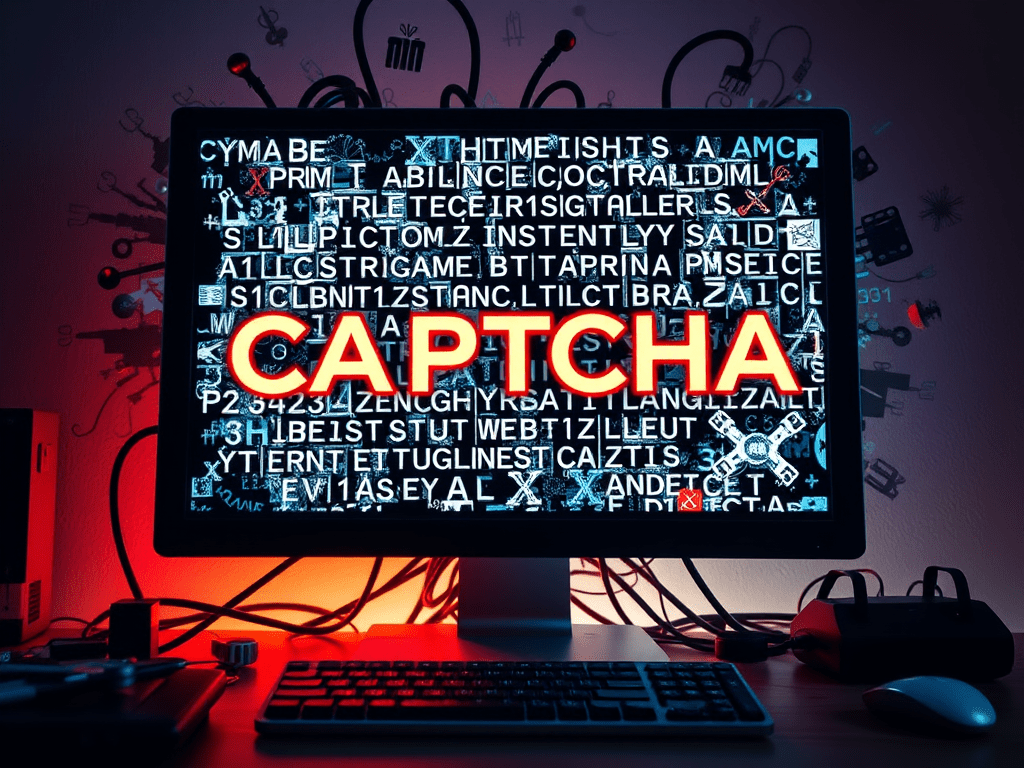
If you’ve ever stared at nine blurry squares of “traffic lights” and started questioning your entire existence, then congratulations: you’ve survived another CAPTCHA test.
I don’t know when it happened, but one day I woke up and realised the internet had quietly flipped the script. Suddenly, websites were asking me to prove myself.
Me. A human. With rent. And anxiety.
Being interrogated by a JPEG of a bus.
Every time that challenge pops up; Select all squares containing a bicycle, I feel like it’s not the website that needs reassurance. It’s me.
“Do I know what a bicycle looks like? Do any of us? Are wheels even real?”
And the worst part? Sometimes I fail.
Not dramatically. Just enough for the website to say, “Hmm… let’s try again.”
The tone is always polite, but you can feel the judgment. That quiet digital side-eye.
Why Are We Doing This Again?
CAPTCHAs weren’t created to ruin our mornings (although the effect is undeniable).
They were created to distinguish humans from bots. The original CAPTCHA; developed at Carnegie Mellon University around 2000, was actually kind of sweet in its intentions. It was meant to block automated spam by using text that humans could read but machines couldn’t.
Then, machines got too good.
So Google gave us reCAPTCHA, which started using real photographs and asked us to “help train AI.” According to Google’s own research, reCAPTCHA has been used to digitize millions of books and maps, and later, to train self-driving cars.
Translation: every time I identify a traffic light, I am involuntarily contributing to a robot’s driver’s licence.
And honestly? I’m tired of being unpaid labour for Skynet.
The Moment I Truly Snapped
A few days ago, I was signing into a platform, just minding my business, when the CAPTCHA asked me to identify all squares containing bridges.
Simple, right? Except the bridge had a shadow. And the shadow was spilling into the next square.
So… is that part of the bridge? Or is that just atmospheric mood lighting?
I clicked it.
Apparently, I was wrong.
That’s when I realised:
If the machine is now better at identifying bridges than I am, which one of us is really the robot here?
The Real Absurdity
The truly wild part is that the more CAPTCHAs we solve, the smarter the AI becomes.
The smarter the AI becomes, the harder the CAPTCHAs become.
And the harder the CAPTCHAs become, the more likely we are to fail them.
It’s a cycle. A recursive loop. A digital existential crisis generator.
In fact, research from the University of California found that modern CAPTCHAs are “increasingly ineffective and increasingly inconvenient,” with bots now solving some tests faster than humans.
So bots are improving.
We are suffering.
And the internet is laughing.
But let me ask you something…
What was your most ridiculous CAPTCHA moment?
The one that made you gasp, laugh, or seriously question if you were still the human in the human–computer relationship?
Drop your story in the comments…
Before You Go…
If you enjoyed unpacking life’s digital nonsense with me, stick around.
Subscribe for more: tech explained with warmth, chaos, and a dash of unnecessary questioning—from your Bloemfontein dev girl who passes most CAPTCHAs on the first try (allegedly).


 Days in the Life of Mo
Leave a Reply