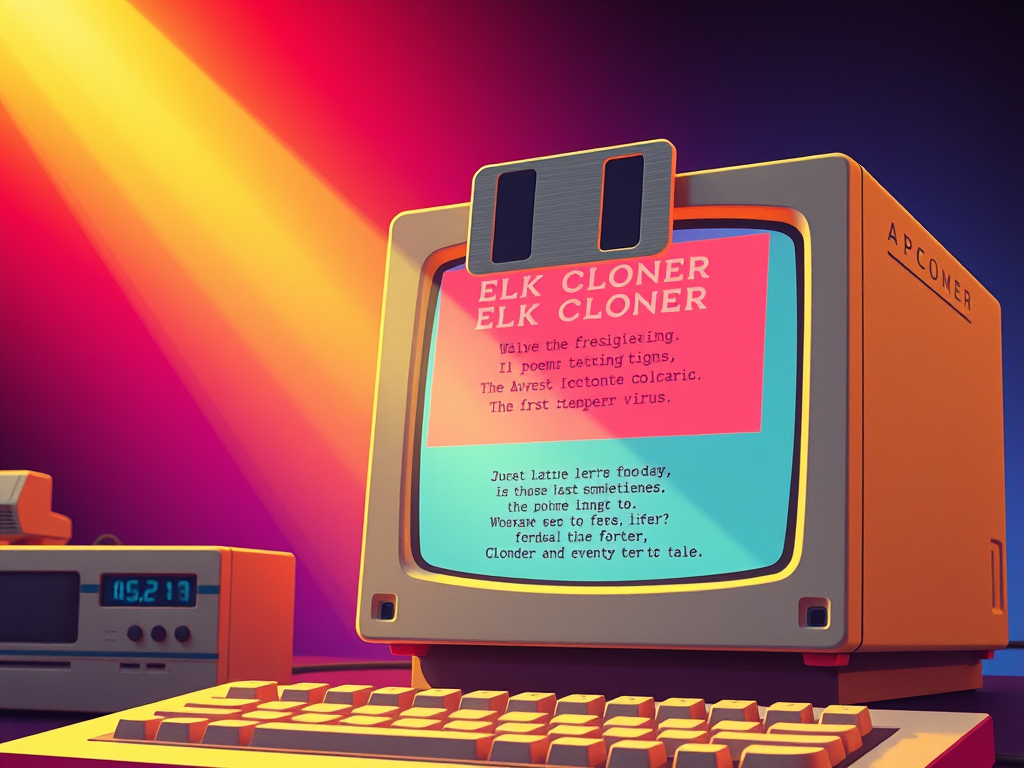
Imagine it’s 1982. Big hair, neon leg warmers, and most importantly, a tiny floppy disk that’s about to make history. Meet Elk Cloner, the very first known computer virus to escape the confines of a lab and spread into the wild… or, well, the Apple II machines of unsuspecting high schoolers.
Elk Cloner wasn’t malicious like today’s ransomware or crypto miners. No, it was mischievous, a digital prankster. You’d insert an infected floppy disk, boot up, and on the 50th run, voilà! A poem would pop up on your screen:
“Elk Cloner: The program with a personality
It will get on all your disks
It will infiltrate your memory
Yes, it’s Cloner!”
Can you imagine reading that in the ’80s? You’d probably laugh, think it was weird, and then check if your homework had survived.
The real genius here? Richard Skrenta, a 15-year-old high schooler, created Elk Cloner as a joke. But unknowingly, he was also inventing the concept of self-replicating code. He planted a seed that would eventually grow into cybersecurity nightmares, antivirus software, and endless “why is my computer slow?” complaints.
Elk Cloner reminds us that the roots of computer viruses are weirdly charming. They weren’t always about money, control, or chaos, they started as digital pranks. And yes, while modern viruses are far scarier, it’s a little comforting to know that once upon a time, viruses had a sense of humor.
So next time you curse your antivirus software, take a moment to tip your hat to Elk Cloner. The prankster who started it all, pixel by pixel.
Curious about the quirky stories behind your screens? Subscribe for playful tech tales, casual dev musings, and a peek behind my hundred tabs… where viruses were once poems and every line of code has a story.


 Days in the Life of Mo
Leave a Reply