Imagine this: You’ve spent an hour meticulously styling a webpage. Everything looks perfect in your code editor. Then you try explaining it to your friend who barely knows the difference between Google Chrome and Google Docs.
“CSS… it’s, uh… like… painting?”
Cue the awkward nods and furrowed brows.
Yes. That’s exactly the kind of face I see when I attempt to describe Cascading Style Sheets to humans who don’t live in the dev bubble. But explaining CSS is an art. A gentle art. And maybe, just maybe, a test of patience.
Step 1: Start With What They Know
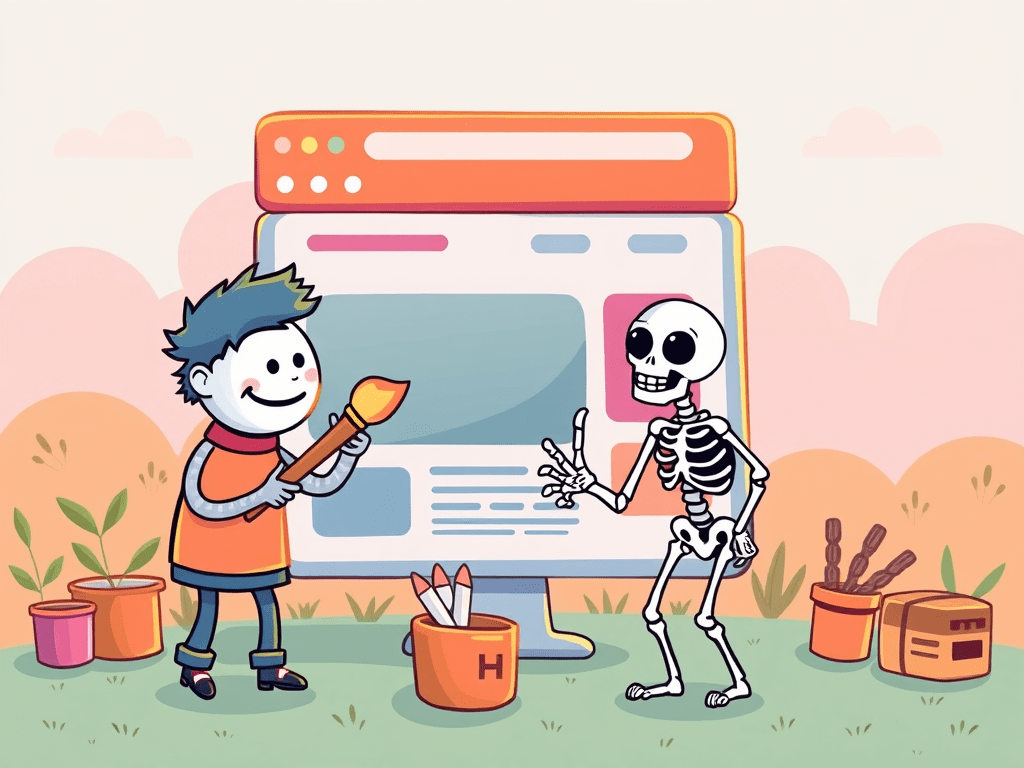
CSS is like clothes for a website. HTML builds the skeleton, the bones, the muscles, the very structure of your page. CSS? CSS is the outfit. The accessories. The way your website poses for Instagram (or, let’s be real, for your mom to think it’s fancy).
According to MDN Web Docs, CSS “describes how HTML elements are to be displayed on screen.” Translation: if your website were a person, CSS is the wardrobe stylist making sure you don’t show up in socks with sandals.
Step 2: Use Everyday Analogies
Margins, padding, borders… these are the personal space rules of your website.
- Margin: How far away you stand from everyone else in a party.
- Padding: How much you let people touch your personal bubble.
- Border: Your fashion statement. Literally a boundary that says, “I exist in this space.”
And colors? Fonts? Oh honey. Fonts are the personality. Comic Sans? Your website is trying way too hard. Helvetica? Confident, clean, “I know what I’m doing.”
Step 3: Avoid Tech Speak (Even When You’re Tempted)
Don’t say “inline-block flexbox alignment” unless you want to lose them immediately. Instead, show them side by side images:
- “See? This button is on the left now. That’s CSS.”
- “And this one floats nicely next to it. Still CSS magic.”
Let them nod. Let them marvel. Pretend it’s wizardry. Because honestly, CSS sometimes is wizardry.
Step 4: Humor Is Your Friend
You could say:
“CSS is like telling a website, ‘Be pretty. Be organized. Don’t touch your neighbor.’ And sometimes it listens. Sometimes it throws a tantrum.”
They’ll laugh. They’ll understand. Maybe not technically, but emotionally.
Step 5: Admit It’s Complicated
CSS is a fickle creature. A website can look perfect on Chrome, slightly weird on Firefox, and completely broken on Safari. According to CSS-Tricks, cross-browser quirks are basically a rite of passage for developers.
So reassure them: “Yes, it’s messy. Yes, I cry sometimes. But yes, we love it anyway.”
Step 6: Bring Them Into Your World
Maybe let them play with a color picker or change a font. Let them see the magic of:
h1 { color: hotpink; }Suddenly they’re empowered. They feel like part of the creation. And that, my friends, is the subtle art of turning confusion into curiosity.
What’s the weirdest analogy you’ve ever used to explain something technical? Or, if you’re brave, tell me what your friends think CSS actually does. I’m ready for the answers, and the laughs.
Stay Tuned for More Dev Life Insights
If you enjoyed this little window into my world of code, quirks, and caffeine-fueled CSS adventures, you’re in the right place.
Subscribe for more stories from a dev who speaks human first, code second, and occasionally makes analogies that will make you question your life choices.


 Days in the Life of Mo
Leave a Reply