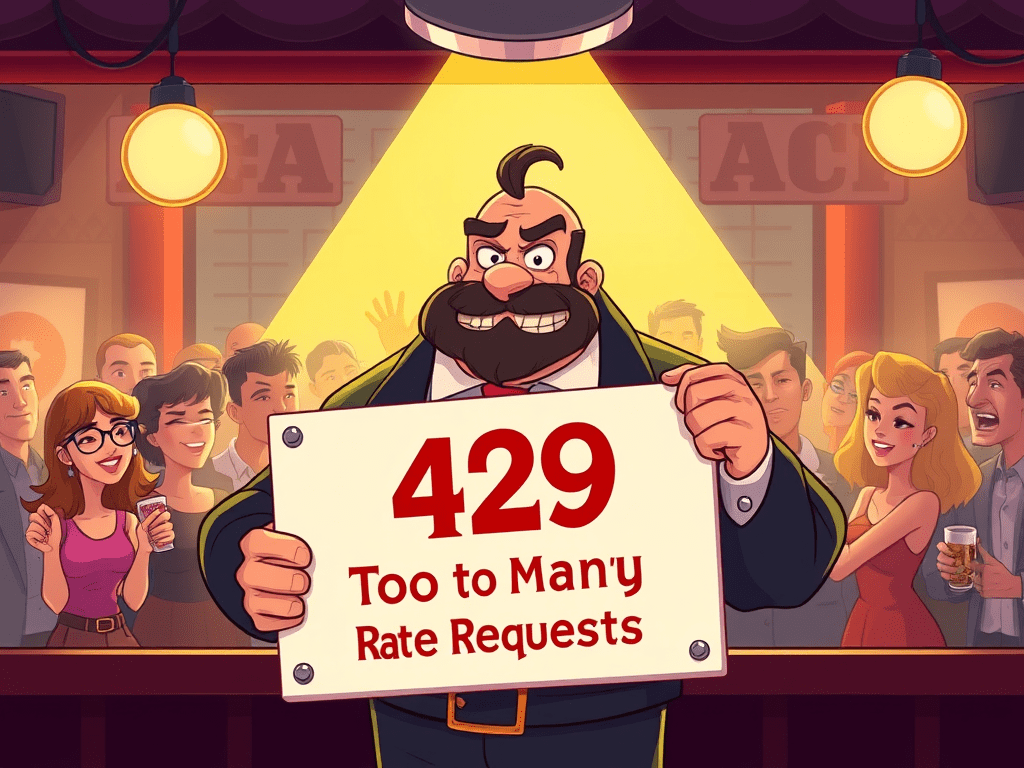
Imagine this: You’re chatting, laughing, sharing, posting. Life is good. And then suddenly… you get cut off. No explanation. No warning. Just silence.
Welcome to API rate limiting.
What is API Rate Limiting?
APIs are like your favorite social club. They let you in, they let you get things done, but there are rules. Rules like:
- “Only X requests per minute.”
- “Don’t hog the bandwidth, buddy.”
- “We love you, but pace yourself.”
Rate limiting is basically the bouncer of the internet. Too many requests too fast? Sorry, you’re in time out. And yes, it feels exactly like being a teenager grounded for sending one too many texts.
Why do we even have it?
If APIs didn’t enforce limits, chaos would reign:
- Servers would crash.
- Databases would melt.
- Users would experience lag, errors, heartbreak.
Rate limiting protects the system, and everyone using it, from the equivalent of a toddler running wild in a candy store.
According to Stripe’s API documentation, rate limiting helps maintain system stability while still giving users reliable access.
In other words, it’s not personal. It’s just housekeeping.
The pain of digital time out
You hit a limit and suddenly your code stops working. Everything is fine, except it isn’t. Your logs scream. Your integrations stall. You’re left staring at a 429 Too Many Requests error like:
“Was it something I said?”
You refresh. Retry. Wait. Sometimes you wait so long, you forget what you were even trying to do.
It’s frustrating. Humbling. Necessary.
How to survive it
- Know your limits. APIs usually tell you what your max requests are. Read the docs. Seriously.
- Implement retries and backoff. Don’t hammer the server. Respect the bouncer.
- Cache where possible. Don’t make requests for things you already have. Remember our friend cache? Yes, it helps here too.
Think of it as playing nice in a shared space, your code learns patience, the system survives, and you eventually get back in.
If you love reading about tech frustrations and triumphs, explained in human terms with a dash of humor, subscribe. I write about code, systems, and all the little moments that remind us developers are humans first, coders second, and coffee addicts always.


 Days in the Life of Mo
Leave a Reply