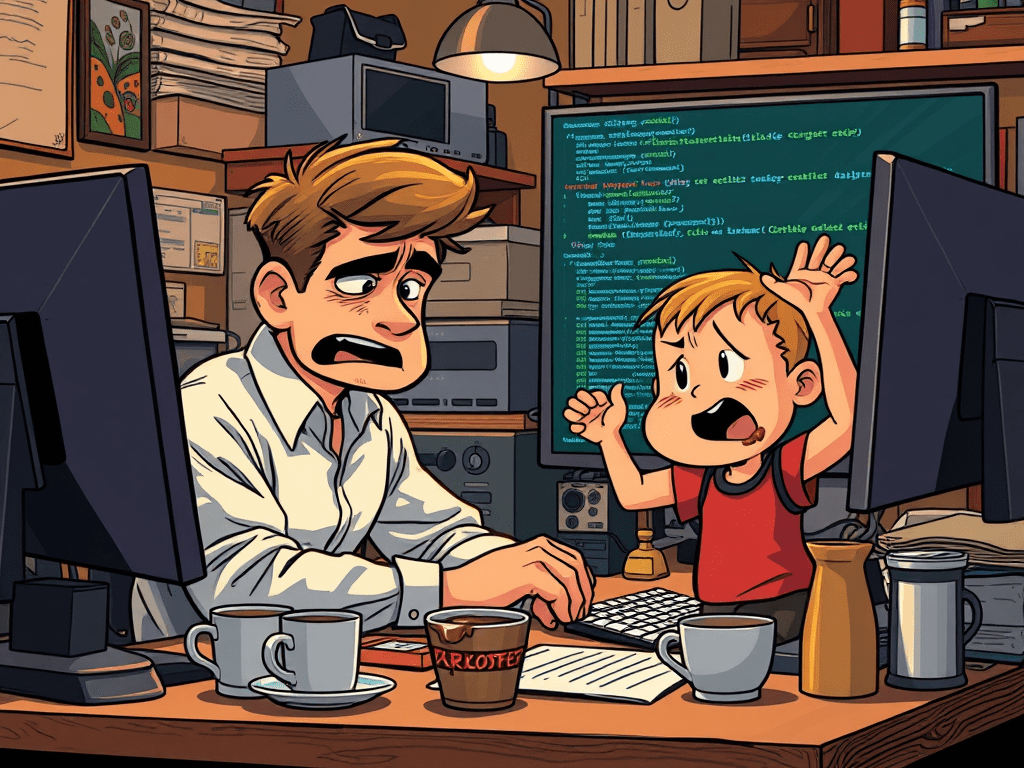
Picture this: you’ve written your code, the logic checks out, everything should be working. But no; it breaks. It breaks spectacularly. And suddenly you’re in the middle of what feels less like a technical issue and more like a parenting exercise.
Debugging is, quite frankly, like arguing with a stubborn child. The code insists:
“I am correct.”
And you, exhausted, coffee in hand, reply:
“No, you literally just threw a NullReferenceException at me. That’s not correct.”
But like any stubborn kid, your code gaslights you. It works perfectly on their machine but refuses to cooperate on yours. It says one thing in the debugger, another in the logs, and when you try to reason with it? Silence. Or worse, new errors.
Why It Feels This Way
- The denial stage – Like a toddler with chocolate smeared on their face insisting “I didn’t eat it!”, your code will fail and still insist it’s fine.
- The misdirection stage – Children are professional distractors. Code is no different. It points you toward some random line when the real problem lives three functions away. (Shoutout to Stack Overflow warriors who’ve saved me here.)
- The sudden cooperation stage – After hours of conflict, the child-code suddenly behaves, as if nothing happened. You didn’t change a single line. You just ran it again. Psychologists call this “random reinforcement.” Developers call it… Tuesday.
The Science-y Bit
Debugging is so universal in programming that psychologists have even studied the cognitive process behind it. A 2018 ACM paper highlighted that debugging requires a mix of hypothesis testing and error elimination, which explains why it feels like detective work with a dash of arguing with someone who keeps moving the goalposts.
And yes, this explains why debugging is exhausting. Our brains are literally juggling multiple “what ifs” while also holding onto a mental map of the codebase. Add caffeine, and you’ve got the perfect recipe for toddler-level tantrums… from you, not the machine.
Why We Weirdly Love It Anyway
Here’s the paradox: as much as debugging feels like arguing with a stubborn child, the victory is unmatched. The moment the child finally admits defeat, you feel like the best parent ever. The problem-solving rush is real, it’s the dopamine hit that keeps developers coming back.
So the next time you’re debugging, just remember: your code isn’t broken, it’s just… going through a phase. Be patient. Negotiate. And maybe bribe it with a print statement or two.
Enjoyed this post? Subscribe to my blog for more unfiltered stories from the trenches of dev life; equal parts bugs, breakthroughs, and the occasional existential crisis with semicolons.



 Days in the Life of Mo
Leave a Reply to tlover tonet Cancel reply